Mabon & the Autumn Equinox A Simple Ritual for Gratitude, Balance & New Beginnings
As summer begins to fade and the days slowly become shorter, there is a noticeable shift in the world around us.
The mornings feel cooler.
The evenings arrive earlier.
Leaves begin to change colour.
And nature starts moving gently towards a season of rest.
For many people who follow the Wheel of the Year, this seasonal transition is celebrated as Mabon, a time associated with gratitude, balance, harvest and reflection.
It also coincides with the Autumn Equinox, when day and night are approximately equal in length.
Whether you celebrate Mabon as part of a spiritual tradition or simply enjoy marking the changing seasons, this can be a beautiful opportunity to slow down, appreciate what you've received and think about what you'd like to carry with you into the months ahead.
What Is Mabon?
Mabon is a modern pagan festival associated with the Autumn Equinox.
It is often described as a second harvest festival, following Lughnasadh and leading towards Samhain.
Mabon is commonly associated with:
Gratitude
Harvest
Balance
Abundance
Reflection
Letting go
Preparing for the darker half of the year
The exact way people celebrate Mabon varies between traditions and individuals.
There isn't one correct ritual.
For some, it may involve a seasonal meal or gathering.
For others, it may be a quiet evening of journaling, candlelight and reflection.
You can make your celebration as simple or elaborate as feels right for you.
When Is the Autumn Equinox?
The Autumn Equinox occurs when the Sun crosses the celestial equator as the Northern Hemisphere moves into autumn.
The exact date changes slightly from year to year.
In 2026, the September equinox occurs on 23 September in the UK.
The equinox is often associated symbolically with balance because daylight and darkness are approximately equal around this time.
It can therefore provide a natural moment to think about balance in our own lives.
Where are you giving too much?
Where could you slow down?
What needs more of your attention?
And what are you ready to release?
What Does Mabon Symbolise?
Mabon is often connected with the idea of harvest.
But harvest doesn't have to mean literal crops.
You can think about the things you've cultivated in your own life.
Perhaps you've:
Started a new project
Built a relationship
Learned something new
Overcome a difficult period
Created healthier habits
Grown in confidence
Made your home more peaceful
Started prioritising yourself
Autumn invites us to pause and notice those things.
We can become so focused on what's next that we forget to appreciate what we've already achieved.
Mabon offers a reminder:
Pause. Look around. Give thanks for what has grown.
A Simple Mabon Ritual
You don't need a large altar or lots of ritual tools to celebrate Mabon.
Here's a simple ritual you can try at home.
Step 1 Create a quiet space
Choose somewhere comfortable.
You might sit at your altar, on your sofa, beside your bed or outside in nature.
Add a few seasonal objects if you'd like.
Think autumn leaves, pinecones, apples, pumpkins, dried flowers or anything else that reminds you of the season.
Light a candle if you'd like to create a warm atmosphere.
Step 2 Take a moment to breathe
Before beginning, take a few slow breaths.
Allow yourself to become present.
You don't need to achieve anything during this ritual.
This is simply a moment to pause.
Step 3 Think about your personal harvest
Ask yourself:
What has grown in my life this year?
What am I proud of?
What have I learned?
What challenges have made me stronger?
What am I grateful for?
Take a few minutes to reflect.
You could write your answers in a journal.
Step 4 Choose something you're grateful for
Choose three things you're genuinely grateful for.
They don't need to be huge.
Perhaps you're grateful for:
A person.
Your home.
Your health.
A beautiful morning.
A new opportunity.
A favourite book.
A quiet cup of tea.
A lesson you've learned.
Write each one down.
Step 5 Think about balance
The Autumn Equinox provides a beautiful symbolic reminder of balance.
Ask yourself:
Where in my life do I feel balanced?
And:
Where do I need more balance?
Perhaps you're spending too much time working and not enough time resting.
Maybe you're constantly caring for other people but forgetting yourself.
Or perhaps you need to create more space for creativity, friendship or joy.
You don't need to solve everything during the ritual.
Simply noticing is enough.
Step 6 Decide what you're ready to release
Autumn is a season of letting go.
Trees don't hold onto their leaves forever.
Nature changes.
We can change too.
Write down one thing you're ready to release.
It could be
An old habit
A limiting belief
A fear
A situation
Perfectionism
Guilt
Something that no longer feels aligned with you
You might write:
“I release what I no longer need to carry.”
You can then tear up the paper as a symbolic gesture, or simply keep it in your journal.
Step 7 Set an intention for the season ahead
Now turn your attention towards the coming months.
Ask yourself
What would I like to invite into my life this autumn?
Perhaps:
More rest.
More creativity.
More confidence.
More connection.
More self-love.
More time in nature.
Choose one intention.
Write it somewhere you'll see it regularly.
Crystals for Mabon & the Autumn Equinox
Crystals can be a beautiful addition to your Mabon altar or seasonal ritual.
You don't need a specific crystal to celebrate Mabon.
Choose stones that feel meaningful to you or that complement your intention.
Carnelian
Carnelian's warm orange colour feels naturally connected to autumn.
It is commonly associated with creativity, motivation and courage.
Citrine
Citrine is often associated with positivity, abundance and confidence.
It can work beautifully with a gratitude or abundance-focused ritual.
Amethyst
Amethyst is commonly associated with calm, reflection and spiritual practice.
It can be a lovely choice for an evening of journaling and introspection.
Clear Quartz
Clear Quartz is frequently used in crystal practices for intention-setting and clarity.
It can be used symbolically when setting your intention for the season ahead.
Black Obsidian
Black Obsidian is traditionally associated with grounding and reflection.
It can be a meaningful addition to a ritual focused on releasing old patterns.
You can explore our Crystal Combinations guide for more ideas on pairing crystals together.
Create a Simple Mabon Altar
If you enjoy creating an altar, autumn gives you so many beautiful natural materials to work with.
You could include:
Autumn leaves
Acorns
Pinecones
Apples
Pumpkins
Dried flowers
Cinnamon
Crystals
Candles
A journal
Seasonal photographs
A small bowl of fruit
You don't need to buy everything.
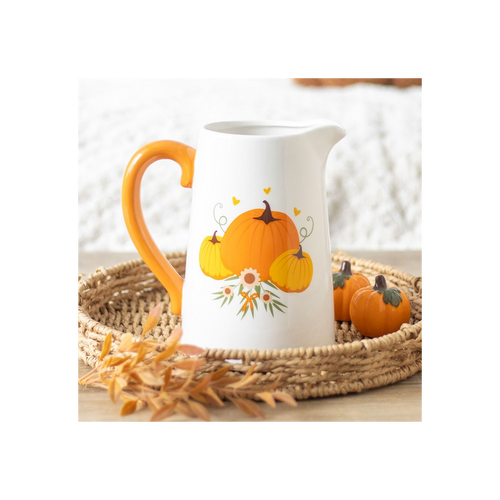
Bring a cosy touch of autumn into the home with this ceramic flower jug. Featuring a pumpkin design and a vibrant orange handle, this jug is perfect for holding autumnal flowers or simply adding a seasonal touch to the kitchen or dining room. Not suitable for food or drink. Handwash only. Do not microwave.
