Real vs Fake Crystals: How to Tell If Your Crystal Is Genuine
Crystals are beautiful, fascinating and full of character. But how do you know whether a crystal is natural, treated, dyed or an imitation?
If you're new to crystals, it can be difficult to know what you're looking at. Some natural crystals have beautiful, unusual colours and patterns, while some imitations can look remarkably convincing.
At Inner Soull, we believe that choosing a crystal should be about more than simply finding the prettiest stone. It's about understanding what you're buying, appreciating its natural beauty and feeling confident about your choice.
So, let's explore the world of real and imitation crystals — including some common myths and things to look out for.
What Makes a Crystal "Real"?
How to tell if your crystal is natural, treated or an imitation
Have you ever picked up a beautiful crystal and wondered:
“Is this actually real?”
With so many crystals available online and in shops, it can be difficult to know what you're looking at. Some stones are completely natural, some have been dyed or treated, and some are made from materials such as glass to imitate a natural crystal.
If you're new to crystals, it can all feel a little confusing.
So, in this Inner Soull guide, we're going to look at some of the things you can check when you're trying to work out whether a crystal is natural, treated or an imitation.
First — what do we mean by a "real" crystal?
When we talk about a real or natural crystal, we're generally talking about a mineral or gemstone that has formed naturally through geological processes.
Natural crystals don't always look perfect.
You might see:
Tiny inclusions
Little cracks or lines
Colour variations
Cloudy areas
Different patterns
Small imperfections
And that's actually part of their beauty.
Natural doesn't mean perfect.
Every piece can have its own character, which is one of the reasons so many of us love collecting crystals.
Look closely at the colour
Colour can give you clues, but colour alone can't prove whether a crystal is genuine.
Some natural crystals have incredibly vivid colours, while other stones may have been dyed or treated to make their colour stronger.
If a stone has an extremely bright or unusual colour, it's worth finding out whether that particular type of crystal naturally occurs in that colour.
For example
Some crystals commonly come in a range of natural colours, while others are frequently dyed or treated.
That's why it's better to research the specific stone rather than assuming:
"Bright = fake."
It doesn't.
Look for natural variations
One thing I love about natural crystals is that they aren't always identical.
If you're looking at several pieces of the same type of stone, you may notice differences in:
Colour • Pattern • Clarity • Shape • Inclusions
These variations can occur naturally.
If every piece looks completely identical, it doesn't automatically mean they're fake — but it can be worth asking more questions about how they were produced or treated.
Look inside the crystal
This is where things get really interesting.
Natural gemstones can contain inclusions tiny features trapped inside the stone as it forms.
These might look like:
Tiny lines
Clouds
Specks
Small crystals
Natural patterns
Inclusions can sometimes help experts identify a gemstone, but here's something important:
An inclusion doesn't automatically mean a crystal is natural.
Some synthetic and treated materials can also contain internal features.
So don't rely on this one test alone.
Watch out for glass imitations
Some imitation crystals are made from glass and can look very convincing.
This is particularly common with stones that are popular because of their colour.
Glass may have characteristics that can give it away, such as:
Very uniform appearance
Unusual bubbles
A glass-like look
Mould seams on some pieces
But again, one characteristic isn't enough to prove what a stone is.
If you're unsure, it's better to ask the seller or have a valuable stone professionally identified.
Is the crystal dyed?
This is something crystal lovers should know about.
Some natural stones are dyed to enhance or completely change their colour.
That doesn't necessarily make the stone "bad".
The important thing is that it is described honestly.
For example, a dyed stone should be sold as dyed rather than being presented as naturally occurring in that colour.
So if you're buying a crystal and something looks unusual, ask:
Has this stone been treated or dyed?
A good seller should be happy to tell you.
Don't believe every crystal test you see online
This is probably one of the most important things I want to say.
You might have seen people recommending:
❌ Scratching a crystal with a knife
❌ Scratching glass
❌ Heating it
❌ Putting every crystal into water
❌ Using a magnet
❌ Tapping it to listen to the sound
Some tests can provide clues in certain situations, but there isn't one simple home test that can identify every crystal.
And some tests can actually damage your stone.
Please don't scratch your favourite crystal just to see if it's real!
If you have a valuable gemstone and want to know exactly what it is, professional identification is the safest option.
Does price tell you if a crystal is real?
Not necessarily.
A very cheap crystal isn't automatically fake.
And an expensive crystal isn't automatically genuine.
Price can be affected by:
Rarity
Size
Quality
Colour
Clarity
Origin
Demand
Cutting and polishing
Treatments
So don't use price as your only way of deciding whether something is genuine.
Buy from a seller you trust
This is one of the easiest ways to feel more confident when buying crystals.
Look for sellers who:
Clearly describe their products
Tell you what stone you're buying
Are honest about treatments where relevant
Show clear photographs
Are willing to answer questions
And don't be afraid to ask.
If you see a crystal you love but aren't sure about it, ask the seller:
"Is this natural, treated or dyed?"
You deserve to know what you're buying.
So, how can you spot a fake crystal?
The truth is that you can't always tell just by looking at it.
And that's something worth remembering.
There are some things you can look for, but properly identifying a gemstone can sometimes require specialist knowledge and equipment.
So rather than looking for one magical test, think about the whole picture:
Look at the colour
Look at the patterns
Look for natural variations
Check for unusual bubbles or features
Find out whether it's been treated or dyed
Research the particular stone
Ask your seller questions
Get valuable stones professionally identified if necessary
And what about the spiritual side?
At Inner Soull, we love the spiritual meaning and traditions surrounding crystals.
You might choose Rose Quartz because it represents love to you.
You might keep Amethyst beside your bed as part of your evening ritual.
You might carry Black Obsidian because you associate it with grounding and protection.
Those personal meanings can make your crystals incredibly special.
But it's also important to remember that spiritual and traditional crystal meanings aren't the same as scientifically proven medical properties.
For us, crystals can be beautiful tools for intention, reflection, meditation and ritual.
And sometimes, simply holding a beautiful stone and taking a quiet moment for yourself is enough.
Final Thoughts
There is so much beauty in the world of crystals, but there is also a lot of information — and misinformation — out there.
You don't need to know everything about minerals to start your crystal journey.
Just stay curious.
Ask questions.
Learn about the stones you love.
And choose sellers who are open and honest about what they're selling.
Most importantly, remember:
A natural crystal doesn't have to be perfect to be beautiful.
Those little variations, inclusions and differences are often what make each piece unique.
Find a crystal that speaks to you, learn its story and enjoy your journey with it.
Welcome to Inner Soull — Spiritual Tools • Crystals • Rituals
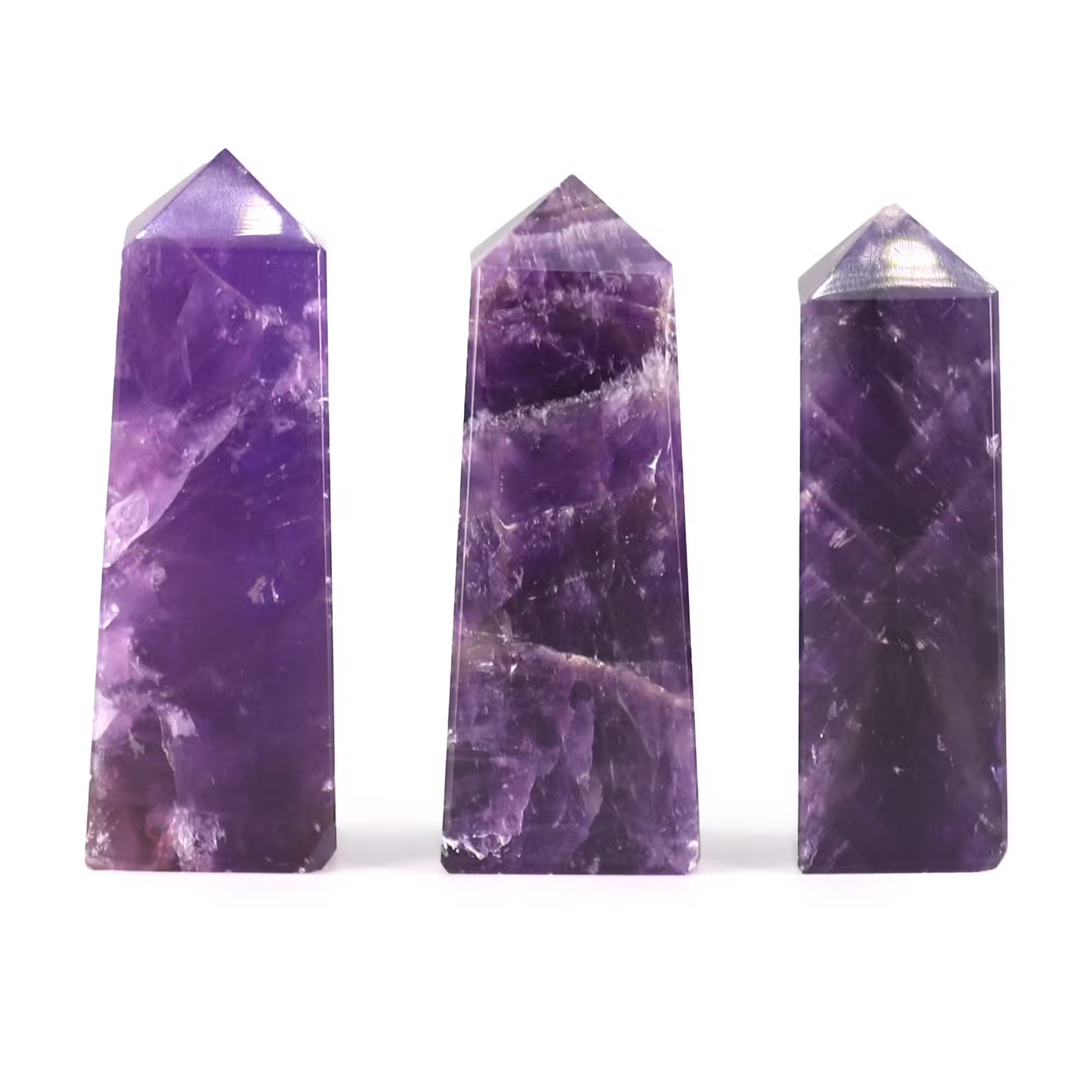
Rich colour and timeless shape make this Amethyst Gemstone Obelisk Point 5cm an eye-catching addition to any space. With its deep purple tones and polished finish, it brings a calming, decorative touch that works beautifully on desks, shelves, or bedside tables.
Believed to help with: calming the mind, reducing stress, supporting restful sleep
Symbolises: peace, spiritual growth, protection
Often used to aid meditation and connect to higher states of awareness, Amethyst is one of the most popular stones for emotional balance and clarity.
Whether chosen as a thoughtful gift or a personal keepsake, it’s an easy piece to display and enjoy every day.
Please note that sizes may vary from 3 cm to 5cm.
